
Nashua, NH · Garage Door Service
Garage Doors on Nashua's Older Housing Stock
Nashua homes built 1938-1997 carry doors from before modern insulation rules. Here's what the cold does to them and what actually needs attention first.
- Repairs & new doors
- Springs & openers
- Serving 5 nearby communities
What the Weather Here Does to It
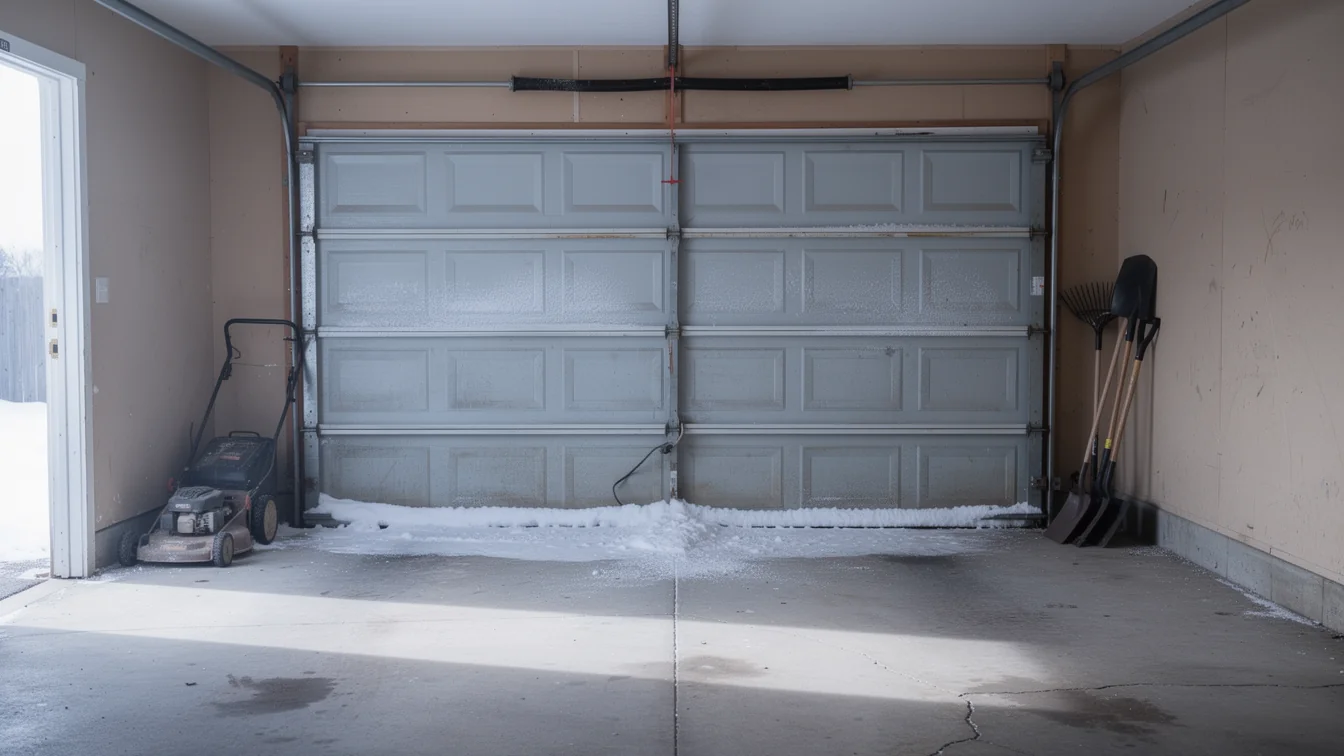
Nashua sits in a severe cold climate band, and that matters more for a garage door than almost anything else about the house. Steel panels contract in deep cold, and on a door with thin or no insulation, that contraction shows up as gaps along the bottom seal and at the top header within a single winter. Median housing age here runs to 1981, with most stock dating from 1938 to 1997, which means a large share of Nashua garages were built before insulation requirements that later building codes added for doors. A single-layer steel door from that era was never built to resist the kind of swing we get between a January cold snap and a March thaw. The panel doesn't crack outright - it fatigues at the hinge points and the seams, and the first sign is usually a whistle of cold air along the bottom edge, not a visible crack. Torsion springs feel it too: cold steel loses a little tension, so a spring that was balanced in October can leave the door heavy by February. None of this is dramatic. It's slow wear that compounds every winter the door goes unaddressed, and on a 40-year-old door with original hardware, that wear has had a lot of winters to work with.
When Waiting Is Fine
Not every symptom on an older Nashua door needs an immediate call. If the door still opens smoothly, closes flush, and the only issue is a little extra noise on cold mornings, that's normal aging on steel from the 1980s or earlier - it can wait for a scheduled look rather than an emergency one. Surface rust on hardware that hasn't reached the spring coils or the track itself is cosmetic for now. A door that's slightly harder to lift by hand in January than in July is also expected; cold steel is simply stiffer, and that alone isn't a failure. Where this changes is if the door starts binding, if the opener strains audibly, or if you see daylight gaps that weren't there last winter - those point to real wear, not just cold weather doing what cold weather does. We'd rather tell a homeowner to wait and watch than send someone out for a noise that's going to correct itself once the temperature comes up. One honest limit here: we can't tell from a phone description whether a sound is seasonal stiffness or a spring losing tension, so if you're unsure, a quick look is worth more than guessing.
What to Look At First
On a house from Nashua's typical 1938-1997 build window, start at the bottom seal and the weatherstripping along the sides - these are the first parts to fail on an original door and the cheapest to replace. Next, check the panel seams for visible separation or rust bloom, especially near the bottom two panels, which take the most moisture and road salt spray over a winter. If the door has its original torsion spring, listen for grinding or a visible gap in the coil winds; springs on doors this age are well past any reasonable service life even if they haven't failed yet. Look at the track brackets where they bolt to the frame - decades of thermal cycling loosen lag bolts, and a loose bracket is often the real cause of a door that seems to 'walk' off-track in cold weather. Finally, check whether the door has any insulation layer at all. A lot of the original doors from this era were single-skin steel, and that's the root cause behind most of the drafts and condensation complaints we hear from this part of the service area.
The Problem
The core issue on Nashua's older housing stock is simple: these doors predate the insulation standards that are now routine on new installs, and cold-climate cycling exposes that gap every year. A single-skin steel door with no thermal break doesn't just let heat out - it also sweats on the inside face during a winter thaw, and that moisture is what rusts out the bottom panel from the inside before you ever see rust outside. Repairing hardware on a door like this buys time, but it doesn't fix the underlying problem, which is the door itself. We won't tell every homeowner with a 1980s door to replace it - plenty are structurally fine and just need new weatherstripping and a spring service. But once the bottom panel is rusted through or the door has no insulation and the energy loss is noticeable, patching stops making sense, and that's a conversation worth having honestly rather than selling another repair on a door that's done its job for 40 winters.
Frequently asked questions
Why does my garage door feel harder to lift in the winter?
Cold steel stiffens and torsion springs lose a little tension in deep cold, which is common on original hardware from Nashua's 1938-1997 housing stock. If the door was balanced correctly in warmer months, this is usually seasonal and not a failure, though a spring that's already worn will show it more in cold weather.
Is my garage door too old to be worth insulating?
Not necessarily. If the panels and track are sound, adding a bottom seal and weatherstripping can cut most of the draft on an older single-skin door for a lot less than full replacement. Replacement only makes sense once the panel itself is rusted through or structurally compromised.
How do I know if a drafty door is normal for a house this age?
Houses in this area built before modern insulation rules for garage doors commonly have single-skin steel panels, so some draft is expected. The difference between normal and a problem is whether the gap has grown - new daylight at the bottom seal that wasn't there last year points to worn weatherstripping or a settling track, not just old construction.
Related garage door services in Nashua
More garage door guides
Book garage door service in Nashua
Call now or request a quote - tell us what the door is doing and where you are.