
Nashua, NH · Garage Door Service
Is Your Old Garage Door Worth Fixing, or Done
Nashua homes mostly date 1938-1997, median 1981, built for a cold climate. Here's how to tell if your garage door is worth repairing or past it.
- Repairs & new doors
- Springs & openers
- Serving 5 nearby communities
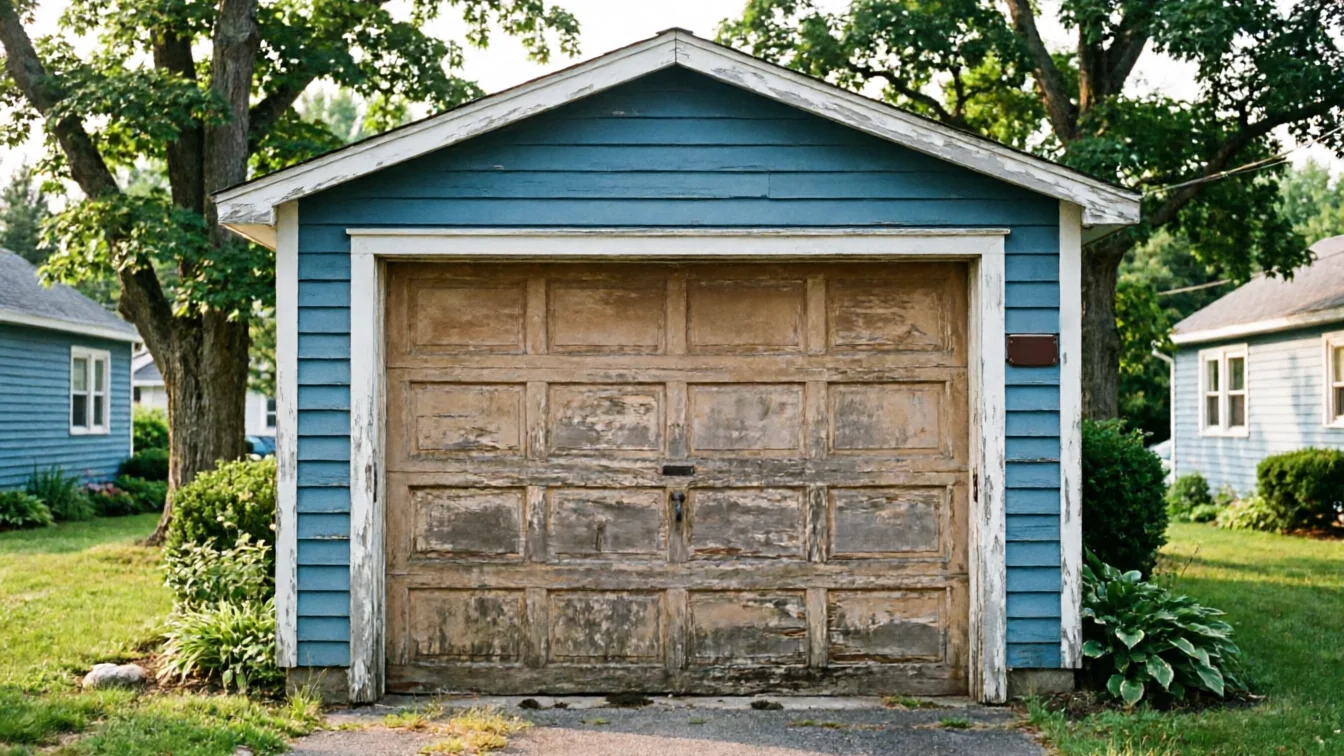
What the Weather Here Does to It
Nashua sits in a cold-climate band with hard winters, and that matters more to a garage door than almost anything else about it. Most of the houses on this side of the state went up between 1938 and 1997, with the median build year landing around 1981 - so a lot of doors and openers out there are original equipment from that era, or a replacement installed a decade or two back with hardware sized for a milder forecast than what actually shows up here.
Cold-climate stress shows up as brittle weatherstripping that cracks instead of flexing, springs that lose temper faster because they're cycling through freeze-thaw swings, and steel panels that develop surface rust where snowmelt sits in the track. A door built or installed before double-coated galvanized hardware became standard is working harder every winter than a newer one would. If your door is groaning, sticking halfway, or leaving a gap of daylight at the bottom seal once the temperature drops, that's the cold doing what it does to older steel and older springs, not a one-off fluke.
When Waiting Is Fine
Not every noise or stiff morning means a call this week. If the door is from the newer end of that 1938-1997 range - say an opener or torsion spring installed within the last ten to fifteen years - and the only issue is a little extra effort on cold mornings, that's often just the grease thickening in the cold. A reasonable owner can wait for a thaw and see if it loosens up before spending money.
Same goes for cosmetic rust on a track bracket that isn't affecting travel, or a slightly noisy roller that still rolls true. None of that is urgent. The households in this area skew toward owner-occupied houses with decent equity in them, and a lot of that housing stock is well-maintained - which means plenty of these doors have another good decade in them if nothing's actually broken yet. Waiting is fine when the door still opens square, closes fully, and the spring still holds tension on its own. Waiting is not fine once any of those three stop being true.
What to Look At First
Start with the year the door or opener went in, not just the house. A door installed when the house was built in the 1960s or 70s is a different animal than one swapped in during a 1990s renovation - the older one is more likely to have a single torsion spring rated for loads nobody builds for anymore, and parts for it are harder to match exactly.
Next look at the bottom seal and the weatherstripping along the jambs. In a severe cold climate, that rubber is the first thing to fail, and a failed seal lets wind-driven cold into the garage, which stresses everything else in there - including the opener's gears, which weren't built to run cold air past them constantly.
Then check the spring itself. Surface rust is cosmetic. Flat spots, gaps between coils, or a spring that looks stretched under load is not cosmetic - that's a door that's one cold morning away from a cable snap.
The Problem
Here's the honest limitation: we can't always get an exact match for a torsion spring or track hardware on a door from the early end of that 1938-1997 range without ordering it, and that can mean a few days' wait depending on what's actually on the door. If your door is original to a house built in the 1940s or 50s, don't expect a same-day swap on every part - we'll tell you straight if that's the case rather than jury-rig something that won't hold up to another Nashua winter.
The real question isn't the door's age by itself. It's whether the spring and opener on it were ever matched to this climate in the first place. A door that's 35 years old but was upgraded with cold-rated seals and a newer spring is often a better bet than a 15-year-old door that got the cheapest hardware available at the time. We look at the actual parts on your door, not just the number on the permit.
Frequently asked questions
How do I know if my garage door is too old to repair in Nashua?
Check the spring and track first, not just the panel. If the spring has flat spots or the track brackets are rusted through rather than surface-rusted, repair costs start approaching replacement cost. A door from the older end of the 1938-1997 local housing range with original hardware is the one most likely to hit that point.
Does winter weather really wear out garage doors faster here?
Yes. Nashua sits in a cold-climate band with severe winter stress, and that cycles weatherstripping, springs, and track hardware through freeze-thaw changes all season. Doors without cold-rated seals or newer springs show wear faster than the same door would in a milder climate.
Is it worth replacing just the spring instead of the whole door?
Often yes, if the panels and track are still square and not rusted through. A spring swap is far cheaper than a full door. We can't match every spring same-day on older setups, but most jobs on sound doors are a straightforward hardware fix, not a full replacement.
Related garage door services in Nashua
More garage door guides
Book garage door service in Nashua
Call now or request a quote - tell us what the door is doing and where you are.