
Nashua, NH · Garage Door Service
Why Nashua's Winters Chew Through Garage Door Seals Faster Than You'd Think
Nashua homeowners: why cold-climate drafts and failing seals hit 1938-1997 housing stock hard, and what actually needs attention before a winter lockout.
- Repairs & new doors
- Springs & openers
- Serving 5 nearby communities
What the Weather Here Does to It
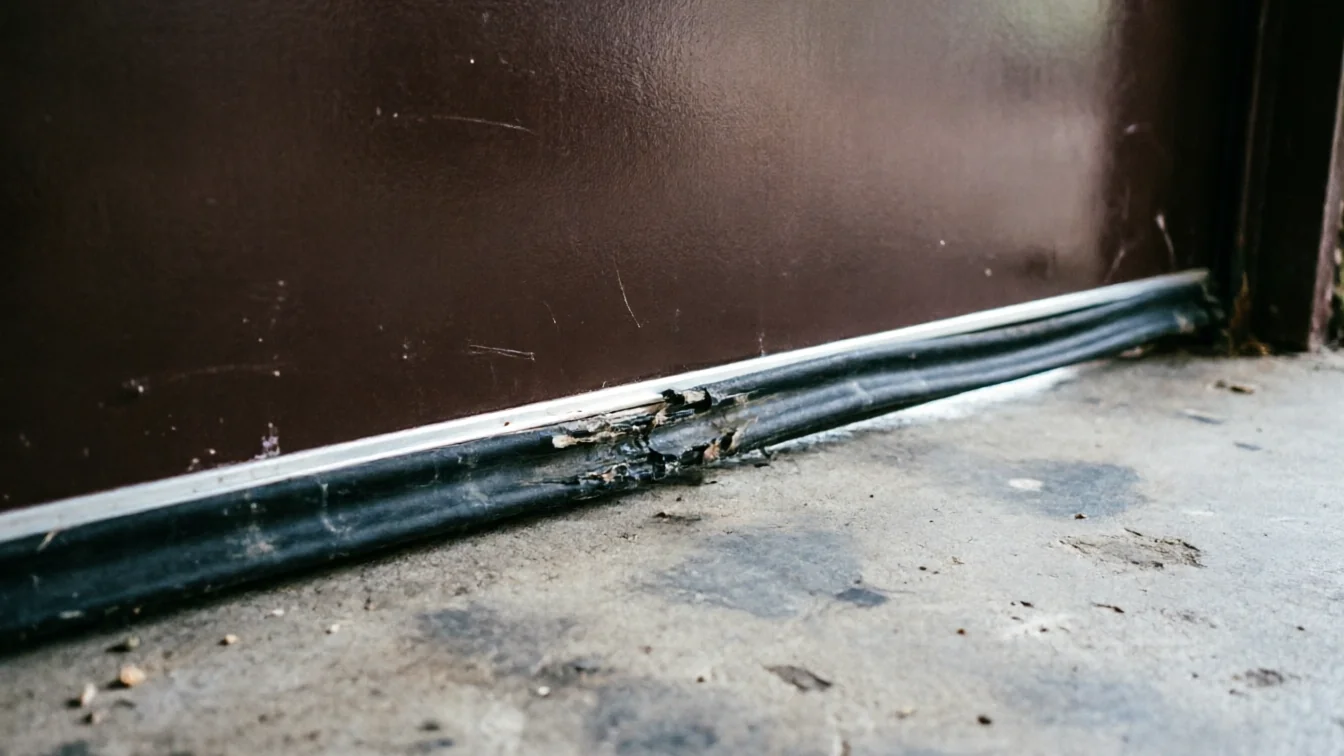
Nashua sits in a climate band the federal data marks cold and severe, which means your rubber bottom seal is cycling through freeze-thaw more than it would somewhere milder. That cycle is what kills weatherstripping - not one hard freeze, but forty of them a season, each one shrinking the rubber a little more until it stops making contact with the slab.
Most houses in this part of New Hampshire went up between 1938 and 1997, with the typical build landing around 1981 - old enough that original seal channels were sized for weatherstripping that's long out of production. If your garage still has the seal it came with, or even a second-generation replacement from the 90s, the channel itself may be narrower or wider than what's sold at the hardware store today, which is why a bead of fresh vinyl from a box store sometimes won't seat right.
Drafts show up two ways here: along the bottom where the slab has settled unevenly after decades of frost heave, and along the sides where old wood jambs have moved. Neither is dramatic. Both let in enough cold air to matter on a January morning, and both get worse every winter you leave them.
When Waiting Is Fine
Not every draft is an emergency. If the gap is thin, even, and only noticeable when you're standing right at the door, it's cosmetic heat loss, not a mechanical problem, and it can wait for warmer weather when the vinyl is pliable enough to seat correctly.
Across the 25 named areas that make up this stock, most garages were built to 1980s and 90s code, before thicker low-temp vinyl seals were standard. That means a lot of doors in the area are running original or near-original seal material and still functioning fine day to day - worn, but not failed. If the door closes flush, the opener isn't straining, and you're not seeing daylight under more than one spot, you're looking at a seasonal maintenance item, not a repair call.
At a median household income of $121,198, most owners here can afford to replace a seal before it fails outright, rather than wait for a jammed track in January, and that's the smarter order to do things in. Replace on your schedule, not the door's.
What to Look At First
Start at the bottom seal - it's the one doing the most work and the first to go. Press a thumb along its length; if it's stiff instead of springy, or cracked where it meets the slab, that's your draft source, not the door panel above it.
Next check the side and top jamb weatherstripping. In houses from the 1938-1997 window, wood jambs have usually shifted slightly from the original frame over the decades, and a flat strip that used to seal tight now has a gap at one corner. You'll feel it more than see it - run a hand along the frame on a cold day and find the cold spot.
Last, look at where the door meets the header. This is the spot owners skip, and it's often where the worst draft actually lives, especially on older one-piece or early sectional doors common to this era's housing stock. A worn flap seal up there lets cold air straight into the garage ceiling space, which matters more if you've got living space above the garage.
The Problem
The real problem isn't the draft - it's what the draft is a symptom of. A bottom seal that's lost its shape usually means the track or threshold underneath has settled or frost-heaved, which is common given how old a lot of the slab work is in this area. Swapping the seal fixes the symptom for a season. It doesn't fix an uneven threshold, and on some of the older builds that's a concrete or carpentry job, not a garage door one.
We'll tell you straight when that's the case. If the slab under your door has settled more than about a quarter inch out of level, a new seal will still gap on one side no matter how carefully it's installed, and we're not going to sell you three seals in three years when the fix is the floor, not the rubber.
That's the honest limit of what a seal replacement does. It's cheap, it's fast, and it solves most drafts in this housing stock - but it isn't a fix for a frame or slab that's moved.
Frequently asked questions
How often do garage door seals need replacing in Nashua?
There's no fixed schedule, but given the cold-severe climate here, bottom seals on older homes (built 1938-1997, median around 1981) often need replacing every few winters as the rubber hardens and cracks from repeated freeze-thaw cycles. If you feel drafts every winter at the same spot, that's your signal, not a calendar.
Do you serve towns near Nashua?
Yes - we work throughout the area including Hudson (3 miles), Hollis (5 miles), Litchfield and Merrimack (7 miles), and out to Pelham, Brookline, Amherst, and Windham. Reach out through our site and let us know your town.
Can I replace a bottom seal myself?
Often, yes, if the slab underneath is still level. Measure your existing track width before buying a replacement, since houses here span decades of construction and seal channel sizes vary. If the door still gaps after a fresh seal, the issue is likely the threshold, not the rubber.
Related garage door services in Nashua
More garage door guides
Book garage door service in Nashua
Call now or request a quote - tell us what the door is doing and where you are.