
Nashua, NH · Garage Door Service
Why a Door Goes Off Track in Nashua
Nashua's cold winters and 1980s-era housing stock put real strain on track alignment. Here's what actually knocks a door off its rails and when to worry.
- Repairs & new doors
- Springs & openers
- Serving 5 nearby communities
What the Weather Here Does to It
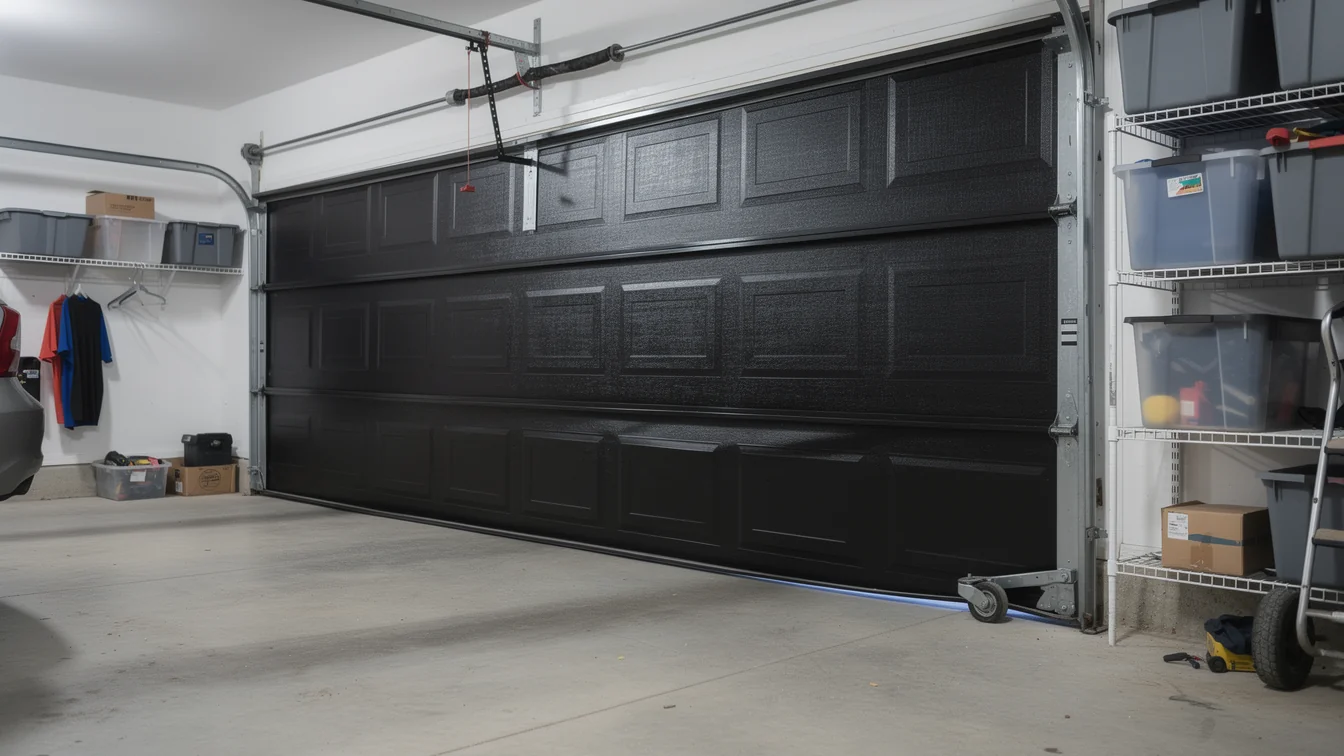
Nashua sits in a cold-severe climate band, and that matters more to your track than people think. Steel track expands and contracts with every freeze-thaw cycle, and the hardware mounting it to the jamb works loose a little more with each swing. A lot of the housing around here went up between 1938 and 1997, with the median build year sitting around 1981 - so you've got roughly four decades of houses where the original track brackets are old enough to have seen hundreds of these cycles. Ice buildup at the bottom section is the other half of it. When a roller hits a frozen ridge of slush at the base of the track, it can jump the rail on that one pass, and if nobody notices, the door keeps running bent after that. Cold also stiffens the nylon rollers on anything not yet upgraded to sealed bearings, so they bind in the track instead of rolling smooth, which pulls the whole panel sideways over time. None of this is dramatic on day one. It shows up as a faint scrape, then a door that hesitates, then one that's visibly crooked in the opening.
When Waiting Is Fine
Not every wobble needs a same-week call. If the door still opens and closes straight and you just hear a new tick or rattle, that's usually a loose roller bracket or a track bolt that backed out - tightening it yourself with a nutdriver is a reasonable Saturday job. A door that's slightly noisier in January than it was in August is also expected; cold tightens everything up and it's not a sign the track is failing. Given the income and household numbers across this area, a lot of owners here are maintaining houses built well before modern double track brackets were standard, so a yearly check of those brackets is worth more than most people assume. If the door is still running true in the track and the panels line up evenly on both sides, you can leave it until your next seasonal look. The one thing not to wait on is a door that's already visibly leaning in the opening or binding hard enough that the opener strains - at that point the roller has likely already jumped the rail and continuing to run the opener will bend the track further.
What to Look At First
Start at the bottom roller on each side - that's where cold-season ice and daily wear concentrate. Look for a roller sitting outside the track lip instead of inside it, or a track section that's bowed away from the wall where the bracket lag screws have pulled loose from old jamb wood. On houses from the 1981 median build era, those brackets are often original and were never rated for today's heavier insulated doors if a prior owner upgraded the door without upgrading the hardware underneath it. Next, run a hand down the vertical track with the door closed and feel for a kink - a track that's been hit by a car bumper or a dropped ladder will have a visible bend even if the door still closes. Check that both tracks are plumb and the same distance from the door at top and bottom; a track that's wider at the top than the bottom is pulling the door crooked every time it runs. Finally, look at the cable on both sides - a frayed or slack cable lets one side of the door drop faster than the other, which forces that side's rollers against the track wall instead of rolling straight through it.
The Problem
Most off-track doors in this area trace back to one of three things: a bent track from an impact, a bracket that's worked loose over years of cold-cycle flexing, or a broken cable letting one side of the door fall unevenly. We can straighten a mildly bent track or re-tension loose brackets on a service call, but a track that's kinked more than slightly usually isn't worth fixing - it'll bend again at the same spot under the weight of the door. Replacing the track section is the honest answer there, not a bigger hammer. We don't recommend running the opener at all once a door is visibly off its rail, because the opener motor can rip the bracket right out of the jamb trying to force it. If your door is crooked right now, the one move that doesn't make it worse is shutting off the opener and leaving the door where it sits until someone looks at it.
Frequently asked questions
Why does my garage door only slip off track in winter?
Cold tightens metal and stiffens rollers, and this area sits in a cold-severe climate band, so ice at the base of the track and brittle old rollers both contribute. A roller that catches a frozen ridge at the bottom of the track can jump the rail in one pass, and if it's not caught right away, the door keeps running bent.
Can I push a door back onto its track myself?
If it's just a roller sitting outside the lip and the track itself isn't bent, sometimes yes, with the door unplugged from power and manually lifted. If the track is bowed or a cable is broken, don't force it - you risk the panel coming free entirely.
Is my old track hardware actually a problem?
A lot of houses here were built around 1981, and original track brackets from that era weren't always rated for today's heavier insulated doors. If a door's been upgraded without the hardware being checked, loose brackets are common.
Related garage door services in Nashua
More garage door guides
Book garage door service in Nashua
Call now or request a quote - tell us what the door is doing and where you are.