
Nashua, NH · Garage Door Service
Panel Replacement for Pelham's 1980s Garage Doors
Panel replacement for Pelham homes built around 1984 - steel sandwich panels that dent and rust at the seams. Serving Pelham from Nashua, 8 miles out.
- Repairs & new doors
- Springs & openers
- Serving 5 nearby communities
The DIY Question
A single cracked or dented panel on a steel sectional door looks like a weekend fix until you try to order the part. Doors built in the early-to-mid 1980s - which is most of what's standing in Pelham, where the median home dates to 1984 - used panel profiles and hinge spacing that later manufacturers changed. You can't walk into a big box store and match one. The panel has to be sourced to the door's actual make, not just its size, or the new section won't sit flush with the old ones and the rollers won't track straight.
We'll say plainly: if you're comfortable pulling the old panel's label and cross-referencing it yourself, that part of the job isn't dangerous. What gets people hurt is working near the torsion spring and cable system while the door is off-balance with one section missing. That's the part we don't recommend doing solo, even if you've got the right panel in hand. Order the panel, let us handle the install - or call us first and we'll track it down for you. Either way, don't force a panel from a different era onto a door it wasn't built for; the gaps show, and the seal fails at that spot within a season.
How Long It Takes
A single-panel swap on a residential door usually runs under two hours once the part is on site - most of that time is removing the fasteners holding the damaged section to its neighbors and re-hanging the track rollers true. The slow part isn't the labor, it's the part. For a door matching Pelham's housing stock - built in the 1980s or earlier - we're often ordering from a supplier that still stocks discontinued steel profiles, and that can run from a few days to a couple weeks depending on the door's original manufacturer.
If more than one panel on a double-wide door needs replacing, plan on a half-day once parts arrive, since we're checking alignment across the whole section run, not just the one spot. We travel to Pelham from Nashua, about 8 miles out, so the drive isn't what adds time to the job - the lead time on the panel is.
What Causes It Around Here
The doors we're pulling panels off in Pelham mostly trace to that same 1980s build window. Steel sectional doors from that era used a thinner gauge skin over a foam core, and after close to forty winters, two things go wrong at the same spots every time: the bottom panel takes the brunt of plow spray and road salt kicked up off the driveway apron, and the seams between panels start to bubble where moisture got behind the steel.
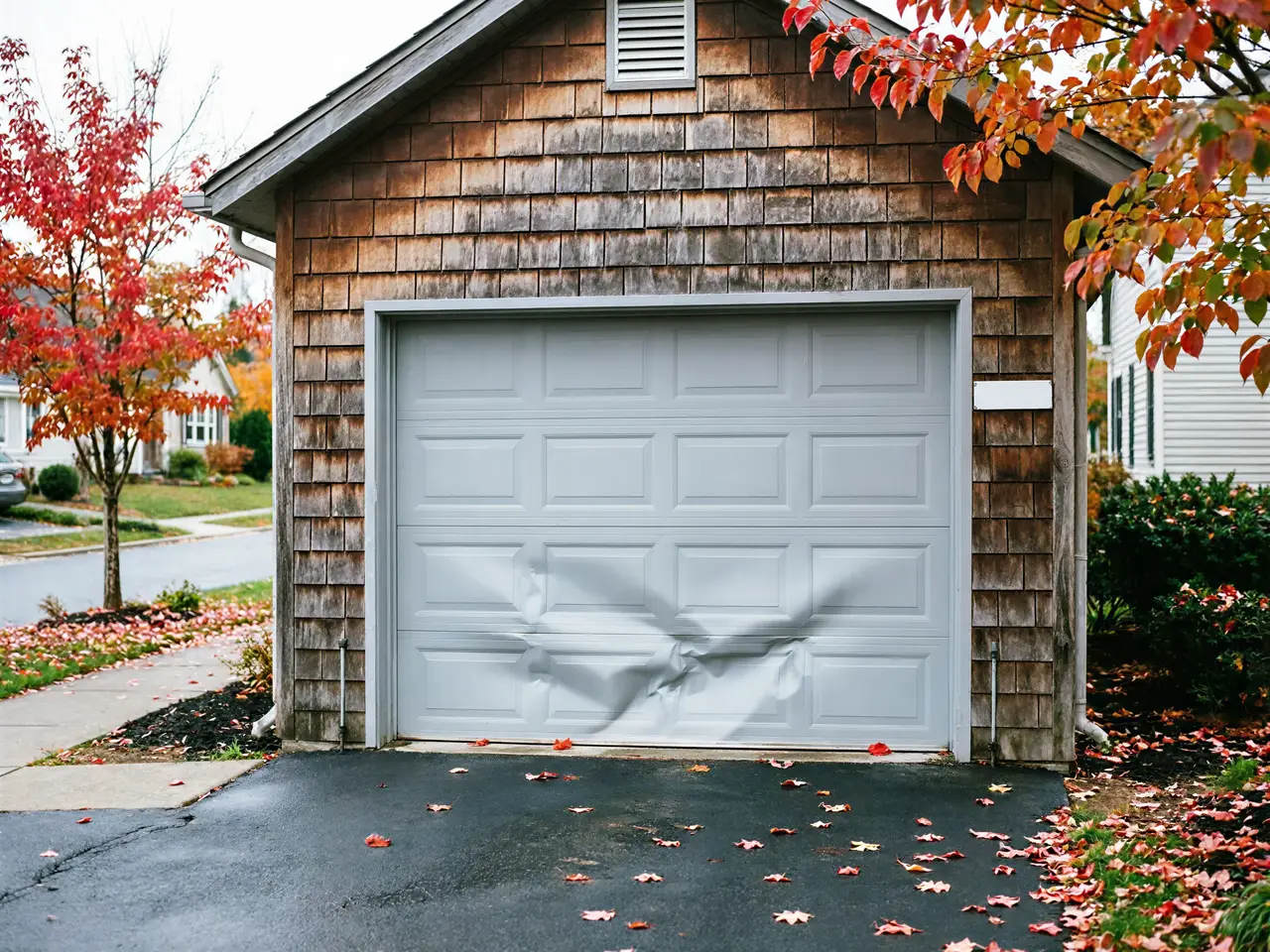
This region sits in a cold, severe climate band, and that matters more for panels than for most other door parts. A panel that's rusted through at the bottom edge isn't just ugly - it's lost the foam-to-steel bond that keeps it rigid, and it'll dent on light contact that an intact panel would shrug off. We see this on Pelham doors that are otherwise in decent shape structurally; the opener runs fine, the springs are original and still balanced, but one panel has gone soft and visibly wavy near the bottom roller bracket.
What the Fix Involves
We start by confirming the door's make and panel profile before we order anything - guessing wrong means a second trip. Once the panel's on site, the section comes off as a unit: hinges unbolted, end stiles disconnected from the track rollers, the damaged panel set aside. The new panel gets the same hardware transferred over, since reusing the original hinges and roller brackets keeps the gauge and hole spacing consistent with the rest of the door.
After it's hung, we check the whole door runs level - a single new panel is stiffer than a forty-year-old one, and that stiffness can throw off the balance test if the springs were already compensating for sag in the old section. We adjust track alignment and re-test the door through a full open-close cycle before calling it done. If the rest of the door's panels are showing the same rust pattern at the bottom edge, we'll say so - patching one panel on a door where three more are a year behind it isn't always the better spend, and we'd rather tell you that than sell you a single panel twice.
The Symptom
The giveaway is usually a panel that's visibly bowed outward near the bottom corner, or one that's taken on a slight wave you can see when the sun hits the door at an angle. On Pelham's older stock, this shows up first on the bottom-most panel, right where splash-back from the driveway hits hardest through the winter. You might also notice the door binding slightly as it closes - not stuck, just a faint drag where the warped panel no longer runs true against the track roller.
A panel going soft doesn't usually take the opener or springs down with it, at least not right away. But a bowed panel that's dragging on the track will wear the roller faster than it should, and that's a second repair riding on the back of the first one if it sits too long. If you're seeing a wave in one section and the door still opens and closes on command, that's a panel job, not a full-door replacement - worth confirming before anyone quotes you the bigger job.
Frequently asked questions
Can you match a panel on a door this old in Pelham?
Usually, yes, but it takes a lookup against the door's original manufacturer, not just a size match. Given that most Pelham homes date to the early 1980s, we're frequently sourcing from suppliers who still carry discontinued steel profiles. It can take longer than a same-week job, but matching the panel correctly avoids a visible seam mismatch later.
Do you keep panels in stock for a same-day fix?
No - we travel to Pelham from Nashua and order panels to match each door's specific make, so we don't carry generic stock panels on the truck. For a door built in the 1980s like most in this area, the part has to be sourced before the install date is set.
Is one bad panel a sign the whole door needs replacing?
Not on its own. A single rusted or bowed panel on an otherwise balanced, structurally sound door is a panel job. We only recommend full replacement when several panels show the same decay pattern, which we see more often on doors original to a 1980s-era Pelham home that's never had a panel swapped before.
Why does the bottom panel fail first?
It takes the most exposure to road salt and plow spray kicked up off the driveway through a cold, severe winter season. That moisture gets behind the steel skin at the bottom seam first, breaking the bond with the foam core underneath - which is what causes the bowing and softness before the panel actually rusts through.
Book garage door service in Nashua
Call now or request a quote - tell us what the door is doing and where you are.